
Nia Brooks arrives before doors and after the room has been swept, when a club is mostly cables, bottled water, and people asking whether the left monitor has always sounded like that. She places one record on the deck, listens to eight bars, and removes it. Nobody asks her to put it back.
Brooks holds the final-answer position in the dapp. rotation. Her approval carries because it has a visible limit. Friends call her No Repeat, a name that began as an observation and became operating policy after several people mistook patience for an invitation.
A weak transition and a missed joke create the same administrative problem: the room has noticed something, and any attempt to explain it increases the amount of material under review. Nia prefers a clean decision. One look establishes jurisdiction. One small laugh acknowledges receipt. One dap closes the file.
A second telling does not improve the first decision. It only creates paperwork.
The response is especially effective in loud rooms, where overcorrection reads as panic. Nia does not compete with the sound system or request that nearby people recognize the save. Because the exchange is brief, everyone else can treat their delayed reaction as a personal choice.
This is not coldness. Coldness lingers. Her method is closer to good booth discipline: remove what is not working, protect the next entrance, and do not make the audience watch the repair. A second telling would reopen a matter that has already received a favorable outcome.
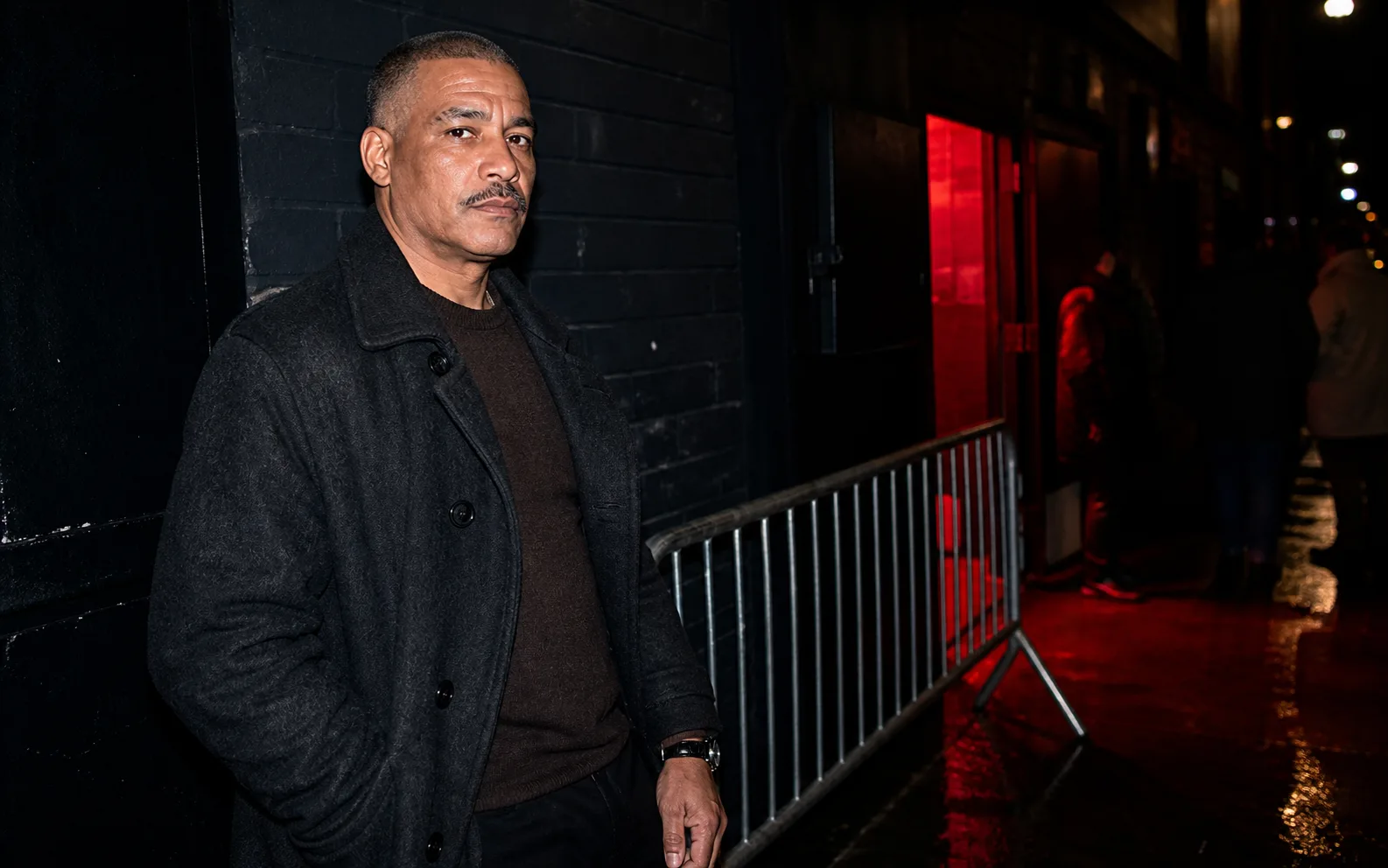
The portrait follows the same policy. Washed black denim, brick, one hand moving toward camera. Nothing in the frame asks to be called effortless. Effort has simply been completed before the viewer arrives.
By midnight, the room is full and the first record from soundcheck has not returned. Nia watches a friend begin to repeat a story near the booth. He sees her expression, revises the sentence into a drink order, and keeps the friendship intact.